
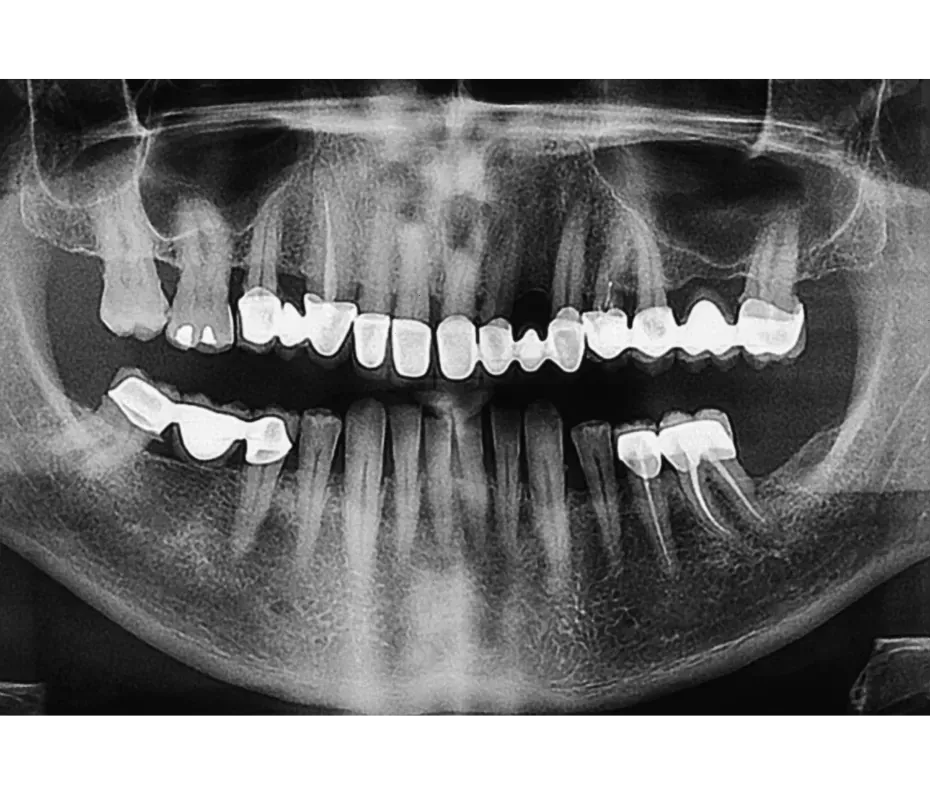
An examination can only cover the surfaces Dr. Beaty is able to see. Radiographs cover the rest: between teeth, inside them, underneath old fillings, and down into the bone that holds everything in place. Digital sensors capture that picture electronically instead of on film, so the image appears on screen within seconds, can be magnified and adjusted, and involves a smaller dose of radiation than the film systems it replaced.
How digital sensors differ from film
A small electronic sensor sits where a film packet used to, and sends its reading straight to a computer. Nothing is dipped in chemicals or hung up to dry, which removes both the wait and the darkroom waste. The exposure needed to form a usable image is lower than film required. Once it is on screen, the picture can be enlarged, sharpened, or have its contrast adjusted, so a shadow that would have stayed ambiguous on a small piece of film can be examined properly before any conclusion is drawn.
What the images reveal
Much of what threatens a tooth happens where light and a mirror cannot reach. Radiographs make those areas legible.
- Decay beginning between teeth, where the surfaces touch
- New decay forming underneath an existing filling or crown
- Bone loss around the roots from periodontal disease
- Abscesses, cysts, and other changes at the tip of a root
- Impacted teeth and wisdom teeth still buried in the jaw
- How permanent teeth are developing and lining up in children
Keeping the dose as low as it can be
Dental radiography already sits at the low end of the radiation people encounter in ordinary life, and the routine around it is designed to keep it there. You wear a lead apron, with a thyroid collar where that is appropriate. Images are ordered because something specific calls for them rather than as a default at every visit. If you are pregnant or think you might be, say so before we begin so we can decide together what can reasonably wait. Records from a previous dentist can often be transferred instead of repeated.
How often you will need them
There is no single schedule that fits everyone. A new patient is usually seen with a fuller set, because it establishes the baseline that everything afterward is compared against. From then on, a smaller number of check images at routine visits is typical, taken more or less frequently depending on your history of decay, the state of your gums, your age, and what has changed since the last set. Dr. Beaty explains why an image is being taken before taking it, and you are welcome to ask.
What the appointment feels like
The process itself is quick and undramatic. You bite gently on a small sensor or its holder, we step behind a shield for a fraction of a second, and it is over. The sensor has firm edges and can feel awkward against the palate or under the tongue, particularly if you gag easily. Say so, and it can be repositioned, swapped for a smaller size, or replaced by a technique that keeps the sensor outside the mouth altogether.
Looking at the results with you
Because the picture appears immediately, we can turn the screen and go through it while you are still in the chair. Seeing the dark patch where decay has crept in under the enamel makes a conversation about a tooth-colored filling or a root canal far more concrete than any verbal description. The same files travel easily to a specialist when a referral needs supporting documentation, which saves you repeating a set of images somewhere else.
Beyond flat images
Some situations call for a different kind of picture altogether. Intraoral scanning with Trios digital imaging captures the shape of your teeth as a three-dimensional model, which helps in planning crowns, aligners, and other restorations without a tray of impression material. It is not a substitute for radiographs, which look through a tooth rather than at its surface, but together the two give a fuller account. If you are curious about the equipment we use day to day, ask while you are in for a visit.
Common questions about digital X-Rays
Are dental X-rays safe?
The radiation involved in a dental radiograph is small, and digital sensors need less exposure than film did. Shielding with a lead apron, and taking images only when there is a reason to, keeps the total lower still. If you have concerns, or you are pregnant, raise it before the appointment so the plan can be adjusted.
How often should dental X-rays be taken?
It depends on you rather than on a fixed calendar. New patients typically have a fuller set taken to establish a baseline, then fewer check images at routine visits. Someone with a history of frequent decay or gum problems may need them more often than someone whose mouth has been stable for years.
Can I get a copy of my dental X-rays?
Yes. Because the images are digital files, copies can be sent to you, to a specialist you are being referred to, or to another dental office if you move. Ask the front desk and they will arrange it. Bringing recent images from a previous dentist can also spare you an unnecessary repeat set.
Do X-rays show cavities the dentist can't see?
Often, yes. Decay that begins between two teeth, or underneath an existing filling, is hidden from view during a visual exam and may cause no symptoms at all until it is well advanced. Radiographs reveal those areas as darker patches, which is why they are part of routine checkups rather than a response to pain.
